
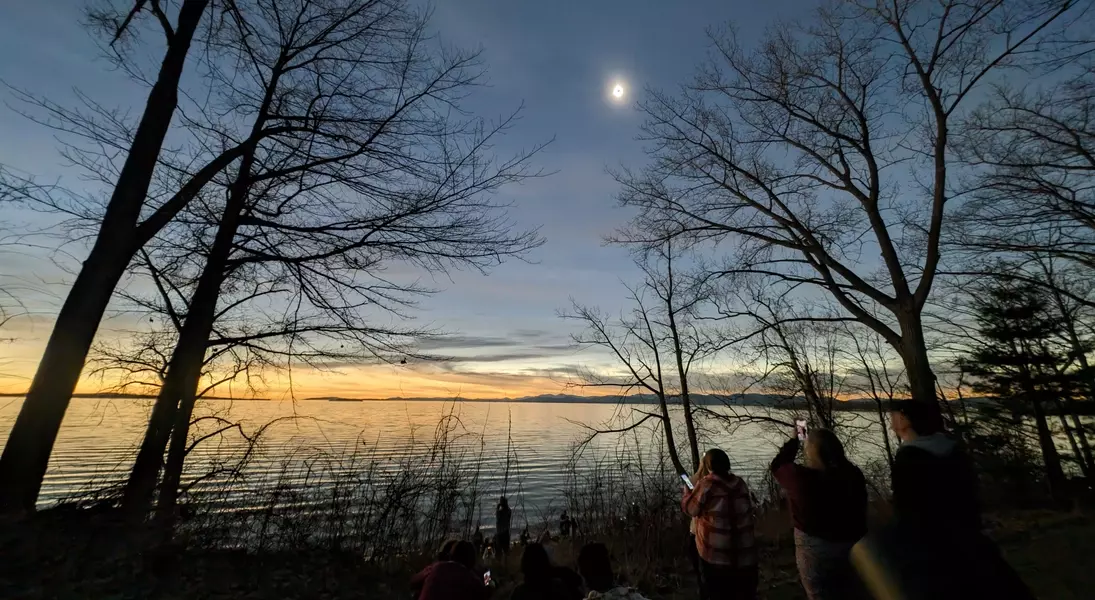
Embrace the Moment: Witnessing the Eclipse Beyond the Lens
The Unforgettable Spectacle of a Total Eclipse
For those who have never personally witnessed a total solar eclipse, no photograph or video can truly convey its majesty. Even the most stunning visual representations fall short of the silent, brilliant intensity of the actual event. Digital screens cannot replicate the shimmering, ethereal glow of the Sun's corona as it encircles the darkened Moon.
The Dilemma of Documenting a Fleeting Phenomenon
Initially, I intended to capture the recent total eclipse using my top-tier camera phones and my Nikon DSLR. However, I am now profoundly grateful that I chose to put aside my photographic ambitions and simply immerse myself in the brief three minutes of totality. The live experience proved infinitely more rewarding than any image I could have captured.
A Breathtaking Encounter with Celestial Beauty
Before April 8, 2024, I believed that day would mark my sole opportunity to witness a total solar eclipse. Yet, after experiencing it firsthand, I realized I must seek out future occurrences. No photograph has ever moved me as deeply as the eclipse itself. The sheer, glorious beauty of the live event left me with a sense of immediate sadness at its ephemeral nature.
The True Appearance of a Total Solar Eclipse
The moment the Sun darkens is heralded by an intense flash. The surroundings instantly cool, though the landscape doesn't plunge into complete darkness. From Lake Champlain in Burlington, Vermont, I observed a panoramic sunset along the horizon, while the central, dark eclipse captivated my gaze. The Sun's corona radiated an otherworldly brilliance, its wisps of light dancing in a way I had never seen. The stark contrast between the inky black Moon and the dazzling corona created an illusion of the Sun being within reach, despite its immense distance.
Overcoming Technological Distraction for a Deeper Connection
The corona's light, though not as bright as the Sun's unfiltered face, bordered on the limits of my comfortable vision. To encounter such shocking intensity after an hour of carefully avoiding the sun's glare was a profound revelation. It felt like a celestial gift unfolding above, prompting spontaneous applause from the surrounding crowd. I was utterly mesmerized, my carefully laid plans for documentation forgotten. I am thankful I made the journey to Burlington, where clear skies allowed for over three minutes of totality. This experience far outshone any photographic ambition.
The Pitfalls of Excessive Equipment During the Eclipse
My original photographic strategy was overly complex. I arrived with a telescope, a DSLR, three phones, and even smart glasses. This proved to be far too much. With only three minutes of totality, there was barely enough time to focus a single camera, let alone manage five devices. My plans quickly unraveled, and I soon abandoned them, choosing instead to absorb the moment. I managed a few decent shots, but the true reward was the direct experience.
Reflections on Eclipse Photography Attempts
The actual viewing experience of the eclipse far surpassed any photograph I've ever seen. I utilized a Vaonis Hestia telescope with my iPhone 15 Pro Max, equipped with a solar filter. While these yielded some reasonable images, the telescope lacked significant power, and the extreme lighting conditions posed a challenge for phone cameras. I also brought a Google Pixel 8 Pro and a Samsung Galaxy S24 Ultra. Recognizing the limitations of their telephoto lenses for capturing intricate details, I opted for wider shots. The Samsung Galaxy S24 Ultra's time-lapse feature, 'Hyperlapse', produced disappointing results; the camera struggled with the intense light balance, and the video failed to convey the changing light as I remembered it. A solar filter on the Google Pixel 8 Pro proved too opaque, obstructing most of the Sun's light.
Lessons Learned for Future Eclipse Viewing
My Nikon D750, paired with an 80-400mm lens, was intended for totality shots without a solar filter. However, in my hurried attempts to manage multiple devices, the photos were overexposed and blurry. Ultimately, a few decent shots emerged from the iPhone and telescope setup, surpassing those taken by my friends with their phones. Despite my perfectionist tendencies, I was content with the outcome because the experience itself was profoundly moving. I am glad I prioritized witnessing the eclipse directly. For the next celestial event, I will bring only one camera and a simpler plan, knowing that the most perfect photograph can never truly capture the magnificence of the live phenomenon.