
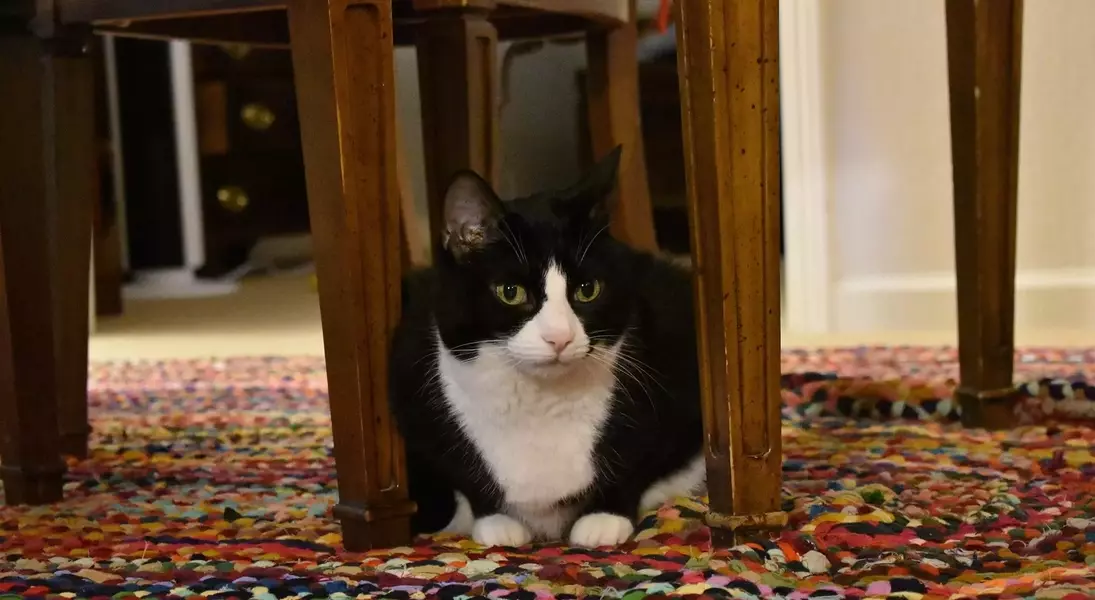
This heartwarming narrative centers on Jeeves, a feline with an extraordinary talent: playing the piano to acquire her meals. Affectionately dubbed a 'tortured artist' by her owner, Jeeves channels her feelings of distress—whether it's the unsettling presence of a vacuum cleaner or an untimely disruption of her nap—into musical compositions. Her instrument, a specialized 'Pet Piano,' cleverly dispenses treats with each press of a key, transforming her emotional expressions into tuneful pleas for food. The article takes readers through the charming journey of how Jeeves was trained, offering glimpses into her unique, improvisational melodies and posing thought-provoking questions about the feline perception of music. It’s a delightful exploration of the unexpected bond between pets, technology, and the universal language of music.
A Feline Prodigy: Jeeves' Musical Journey to Culinary Rewards
In a charming residence, a feline named Jeeves has captured the attention of many with her remarkable ability to play the piano, a skill she employs strategically to request her meals. On a recent morning, following the startling appearance of the vacuum cleaner, Jeeves, a cat of refined tastes and dramatic flair, was observed composing a somber melody on her instrument. This peculiar habit, her owner recounts, is a regular occurrence, often triggered by minor household disturbances or any disruption to her comfort, such as being roused from a lap-nap.
Jeeves' instrument of choice is a specially designed 'Pet Piano,' a smart feeder that dispenses treats each time a key is gracefully pressed by her paw. This ingenious device, born from the creativity of a dedicated cat trainer and YouTuber, features a simplified octave. While Jeeves has yet to master complex chords or intricate melodies, often repeating the same note with earnest dedication, her performances are always unique and deeply felt. Her owner humorously notes that Jeeves' artistic endeavors are typically accompanied by a 'moonlight serenade' should she be disturbed during her nighttime slumber.
The training regimen for Jeeves was surprisingly straightforward, facilitated by the Pet Piano's accompanying smartphone application. The app includes a 'training mode' that gradually increases the number of key presses required for a treat. Jeeves, being highly food-motivated, quickly adapted, progressing to playing eight-note compositions for her food. The initial breakthrough came when her owner placed a treat directly on a key; as Jeeves swiped at it, the dual reward from both the key and the dispenser cemented the association in her mind.
While the Pet Piano offers options for auto-tuning her compositions, her owner prefers Jeeves' raw, unadulterated musical expressions. These 'weird little compositions' are never identical, ranging from repetitive single-note sequences to more adventurous explorations across the keyboard. This leads to profound ponderings about Jeeves' inner world: what thoughts drive her diverse musical choices, what the act of playing the piano signifies to her, and how music itself is perceived through her feline senses.
Beyond mere hunger, Jeeves' musical inclinations appear to be deeply intertwined with her emotional state. Her owner observes that particularly agitated moments—such as after a startling vacuum cleaner encounter—often lead her to the piano. Here, she finds solace, not just in the act of playing, but in the immediate reward of food. It seems Jeeves, in her unique way, is 'eating her feelings,' a relatable coping mechanism for this extraordinary feline artist.
The story of Jeeves and her piano offers a delightful insight into the potential for interspecies communication and the surprising ways technology can enhance the lives of our beloved pets. It serves as a heartwarming reminder that even our furry companions can possess hidden talents and complex emotional lives, expressed in the most unexpected and melodious ways.