
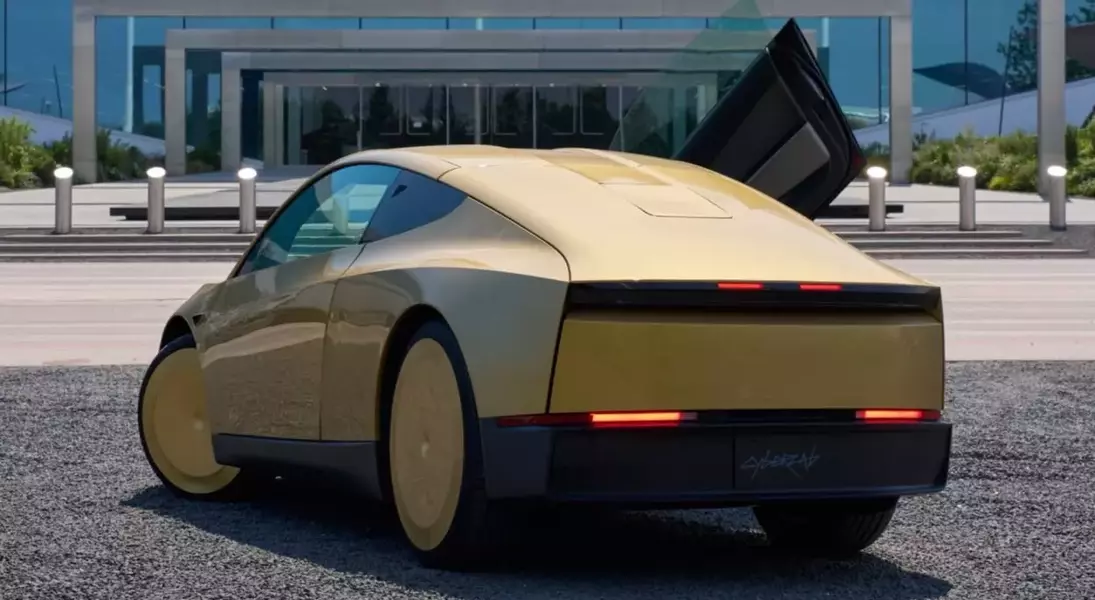
Tesla's robotaxi fleet, the Cybercabs, now features integrated Starlink internet access. This development has sparked discussion, particularly considering that these autonomous vehicles are anticipated to primarily operate in densely populated urban environments, where 5G connectivity is already widely available. Tesla CEO Elon Musk has provided an explanation for this seemingly unusual integration, citing an industry analysis that projects a dramatic surge in automated internet traffic compared to human usage in the coming years. This decision hints at a deeper strategic vision, potentially involving the growing synergy between Tesla and Musk's other venture, SpaceX.
Musk's rationale for equipping Cybercabs with Starlink is rooted in the anticipated explosion of data generated by artificial intelligence. He foresees a future where bot traffic on the internet far surpasses human traffic, necessitating an infrastructure capable of handling unprecedented bandwidth. Starlink, with its high-speed satellite internet, is positioned as the solution to meet these escalating demands. This integration could also be a precursor to a more profound consolidation of Musk's enterprises, particularly between Tesla and SpaceX, fostering greater control and operational efficiency across his diverse technological empire.
The Strategic Imperative of Starlink in Tesla's Robotaxis
Tesla's decision to equip its Cybercabs with Starlink connectivity is a strategic move that goes beyond immediate needs, anticipating a future landscape dominated by AI-driven data. While 5G is prevalent in urban centers, Musk's vision highlights the future requirements for massive bandwidth that current terrestrial networks may struggle to provide. The integration signifies a forward-looking approach to ensure robust and reliable data exchange for autonomous operations, especially as AI systems become more complex and data-intensive. This foresight aims to future-proof the Cybercab fleet, enabling seamless operation and advanced capabilities regardless of conventional network availability.
The integration of Starlink within the Cybercab system is driven by a long-term strategic perspective. Elon Musk emphasizes that the increasing demands of AI will necessitate significantly higher bandwidth than traditional 5G networks can consistently deliver. By incorporating Starlink, Tesla ensures its autonomous vehicles are prepared for an era where data traffic generated by AI bots will vastly exceed that of human users. This move not only enhances the operational resilience of the Cybercabs but also strengthens the symbiotic relationship between Tesla and SpaceX, potentially leading to greater integration and control over their technological ecosystems. This approach guarantees that the Cybercabs maintain optimal performance and connectivity, crucial for the deployment and scaling of a fully autonomous transportation network.
Elon Musk's Vision: AI, Bandwidth, and Corporate Convergence
Elon Musk's justification for the Starlink integration in Cybercabs is deeply tied to his belief in the exponential growth of AI and its concomitant data demands. He cites projections indicating a thousand-fold increase in bot-generated internet traffic over human traffic within five years. According to Musk, only Starlink possesses the necessary high-bandwidth capacity to manage this impending data explosion. This perspective underscores a broader ambition to create a self-sufficient technological ecosystem, where Tesla's AI-driven vehicles are seamlessly supported by SpaceX's global satellite internet infrastructure, minimizing reliance on external service providers and maximizing operational independence.
Musk's explanation extends beyond mere technical requirements, alluding to a strategic convergence between his two major companies, Tesla and SpaceX. The substantial increase in bot traffic, as assessed by Cloudflare, mandates a robust and scalable internet solution, which Musk asserts can only be provided by Starlink. This integration not only addresses the immediate and future connectivity needs of Cybercabs but also strengthens the synergy between Tesla's automotive and AI advancements with SpaceX's orbital internet capabilities. This deepening operational overlap could pave the way for a more unified corporate structure, granting Musk enhanced control and streamlining decision-making processes across his diverse ventures, thereby fostering a highly integrated and powerful technological conglomerate.