
This article delves into the exciting realm of remote wildlife photography, focusing on the innovative 'Camtraptions' camera trap system. It highlights how these sophisticated devices, developed by award-winning photographer Will Burrard-Lucas, enable the capture of exceptional images of elusive animals without requiring the photographer's constant presence. The narrative details personal experiments conducted by the author, covering both daytime bird photography and more complex nighttime scenarios utilizing external flashes. The piece emphasizes the superior image quality achievable with Camtraptions compared to conventional trail cameras, advocating for a strategic, pre-planned approach to maximize photographic success. Through these experiences, the author rediscovers the potential of older DSLR equipment, reinvigorating a passion for wildlife capture.
The journey into advanced wildlife photography began for the author at the Sony World Photography Awards 2026, where an encounter with acclaimed wildlife photographer Will Burrard-Lucas sparked inspiration. Burrard-Lucas, known for his captivating images of African wildlife captured using remote Canon DSLRs, shared insights into his unique methodology. His self-designed infrared camera traps, called Camtraptions, wirelessly connect to professional cameras, triggering the shutter upon detecting movement. Notably, Burrard-Lucas endorses the use of older DSLRs for these setups, citing their cost-effectiveness and reliability for extended deployments, particularly when integrated with flash systems.
Intrigued by the potential of these devices, the author decided to test the Camtraptions system in a personal setting: a home garden. This initiative was driven by a desire to move beyond rudimentary wildlife photography methods that demanded excessive time and patience. The promise of automatically capturing high-quality images of garden inhabitants with minimal direct involvement was a compelling factor. The Camtraptions devices offer a significant upgrade over typical budget trail cameras, which, despite their convenience, often yield low-resolution JPEG images and standard-definition video due to their smaller sensors and less sophisticated optics. For serious photographers aspiring to capture award-worthy, intimate wildlife portraits, the combination of a Camtraptions Passive Infrared (PIR) sensor and a high-end camera presents a robust solution.
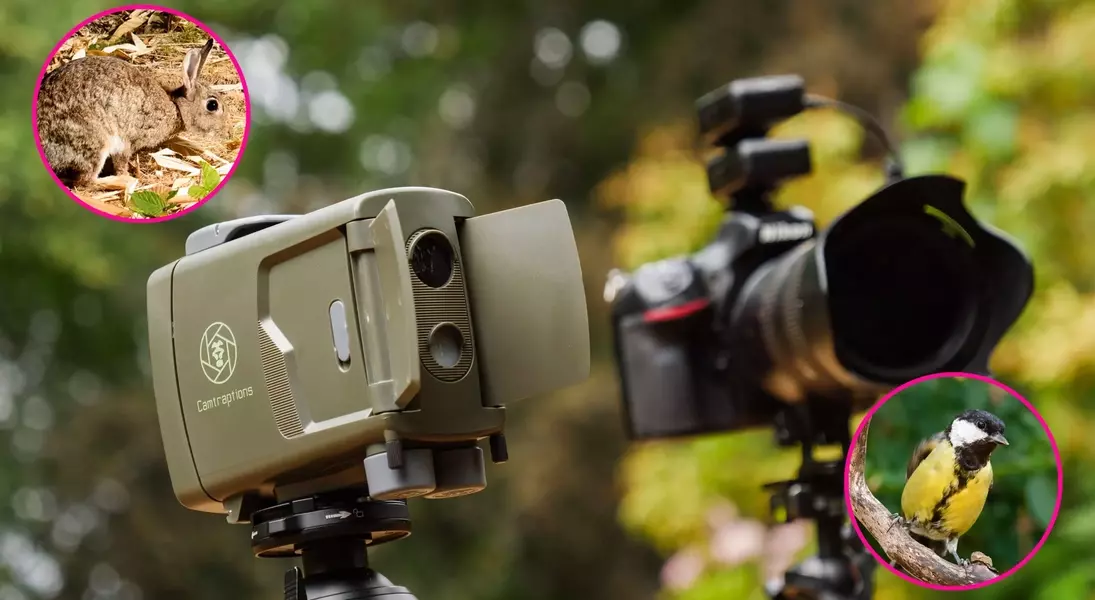
The first practical application of the Camtraptions system involved daytime bird photography. The setup was straightforward: a tripod-mounted Nikon D800 DSLR with a 70-200mm f/2.8 lens, positioned alongside the Camtraptions device on a separate tripod. Both were aimed at a branch baited with birdseed in a frequented part of the garden. Camera settings were meticulously chosen: a fast shutter speed (1/500 sec) to freeze motion, a moderate aperture (f/9) for adequate depth of field, and auto ISO capped at 3200 to accommodate varying light conditions, particularly dawn and dusk. A slight underexposure of -0.7EV was applied to preserve highlight detail in bright plumage. The results were remarkably successful, with dozens of well-composed images of local bird species captured automatically, some even showcasing the ambient light of dusk. This initial triumph encouraged the author to embark on a more ambitious project: nighttime wildlife photography with flash.
The nighttime endeavor presented a new set of challenges, primarily the unpredictable movements of nocturnal animals like deer, foxes, and badgers. Unlike birds, these larger creatures lacked established trails in the garden, necessitating a speculative placement of the camera and bait (peanut butter, a badger favorite). The technical hurdle centered on lighting. To achieve clear images in darkness, external flashes were indispensable. Two tripod-mounted flashguns, each equipped with remote receivers, were integrated into the setup. A transmitter on the camera communicated with these flashes, completing a chain of command that originated from the Camtraptions sensor. This complex arrangement required a substantial power source, totaling 22 rechargeable batteries across all devices. Exposure settings for nighttime were also critical: a 1/200 sec shutter speed for flash synchronization and motion freezing, an aperture of f/10, and auto ISO up to 3200. Test shots with the author confirmed optimal flash power settings to achieve a balanced exposure with subtle background detail rather than a completely black backdrop. Despite capturing only wild rabbits during the first night, the technical quality of the images was excellent, demonstrating sharp detail and effective lighting. The ongoing experiment, benefiting from the automated nature of the setup and the long battery life, continues with the expectation of eventually photographing the larger, more elusive garden mammals.
The synergy between Camtraptions gear and a DSLR system offers a compelling value proposition for serious wildlife photographers. While the initial investment might exceed that of a basic trail camera, the professional-grade results and reliability make it a worthwhile expense. The ability to achieve portfolio-quality images that might even contend in photographic competitions underscores the system's effectiveness. This experience has not only revitalized the author's dormant Nikon DSLR equipment but also ignited a renewed passion for wildlife photography, transforming it into a captivating and ongoing pursuit.