
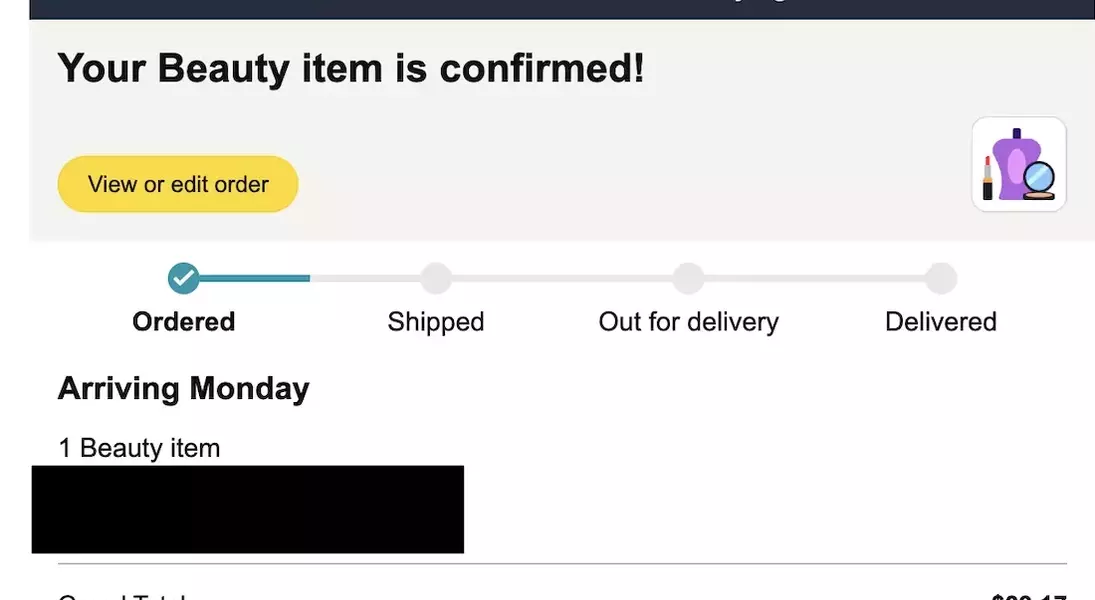
Amazon's order confirmation emails have undergone a notable transformation this summer, shifting from detailed item listings to more generalized product categories. This alteration, observed by customers since July, has sparked considerable frustration. What initially appears to be an inconvenient change for shoppers trying to track their purchases, or even raising concerns about spam, is, in fact, a calculated strategy by Amazon. The e-commerce giant aims to maintain a direct relationship with its customers and protect valuable purchase data from the burgeoning landscape of AI-powered shopping agents offered by competitors like Google.
Details on Amazon's Evolving Email Strategy and the AI Landscape
The noticeable shift in Amazon's order confirmation emails began around July 2026. Prior to this, customers received emails with specific product thumbnails and names. However, recent emails have become remarkably vague, displaying only broad categories such as "Your Beauty item is confirmed!" or "1 Nutrition & Wellness, 1 Wireless Accessories." This lack of detail forces recipients to navigate to Amazon's official app or website to ascertain the exact items purchased. This change has drawn a wave of complaints from frustrated shoppers, some of whom perceive these simplified notifications as potentially fraudulent.
Behind this seemingly minor change lies a significant industry trend: the rise of artificial intelligence in e-commerce. Over the past year, tech companies have been heavily investing in AI agents designed to handle consumer tasks, including online shopping. Google, with its vast product catalog, is at the forefront of this movement, introducing AI-driven shopping features like Gemini Spark, which can build personalized itineraries and manage purchases across various merchants. Google's vision includes integrating a universal shopping cart directly into services like Gmail and YouTube, allowing AI agents to make purchases on a user's behalf. This efficiency, however, relies heavily on users sharing their personal data.
This development poses a challenge for service providers, a phenomenon dubbed the "DoorDash problem," where AI agents could potentially reduce direct website traffic to retailers. While many major retailers like Walmart, Target, and Wayfair have partnered with Google's AI commerce features, Amazon has notably abstained. Amazon has adopted a more protective stance regarding its direct engagement with shoppers. In a notable instance, Amazon took legal action against Perplexity for enabling users to shop on Amazon through their platform, although a US court sided with Perplexity in August 2026. Simultaneously, Amazon has been developing its own AI-powered shopping functionalities, such as price tracking and automated purchasing, integrated into its Alexa for Shopping platform within the Amazon app.
When questioned about the change in email format, Amazon spokesperson Maxine Tagay clarified that the simplification was intended to streamline order details for customers who frequently shop via mobile devices and utilize the "Your Orders" page on the Amazon app for real-time updates. Furthermore, Tagay stated that this move "reduces customer information shared outside the Amazon app and website to further improve customer privacy." This statement suggests a dual purpose: enhancing customer privacy by limiting data exposure while simultaneously steering customers back to Amazon's proprietary platforms, effectively hedging against external AI shopping agents.
Ultimately, this strategic pivot by Amazon aims to safeguard its direct consumer relationships and proprietary data. However, for the average consumer, it translates into a slightly less convenient shopping experience, requiring additional steps to access detailed purchase information.
Reflections on the Evolving Digital Retail Landscape
The recent adjustments to Amazon's order confirmation emails highlight a critical juncture in the digital retail ecosystem. This change is more than a mere inconvenience; it signals a growing tension between e-commerce giants and the emerging wave of AI-powered agents. As AI becomes more sophisticated, its ability to mediate consumer interactions with online platforms poses both opportunities and threats. For Amazon, maintaining a direct channel with its vast customer base is paramount, not just for sales but also for data control and competitive advantage. This strategic move underscores the increasing importance of proprietary platforms in an AI-driven world. While the pursuit of enhanced privacy is a stated benefit, the underlying motivation appears to be a fierce battle for consumer attention and data ownership. Consumers are now faced with a trade-off: convenience versus control over their purchasing journey. As AI continues to evolve, we can expect more such strategic maneuvers from major tech players, forcing us to constantly re-evaluate how we interact with digital services and who ultimately benefits from our online activities.